Tuesday, October 12, 2010

1933 Goudey #92 Lou Gehrig PSA 8!!


WhereTheyAint.com just sold a 1933 Goudey #92 Lou Gehrig PSA 8 card in a private sale for $12,750!!
That is 112% of the SMR Price!!!


To Consign with us, please contact Sales@WhereTheyAint.com

Tuesday, December 15, 2009

High Grade PSA Cards at Auction from WhereTheyAint.com


WhereTheyAint.com is proud to offer some of the biggest and best sports cards in the hobby! Currently on eBay are the following superb PSA graded baseball cards all starting at an initial bid of $.01:

1.1911 T205 Christy Mathewson PSA 6
2.1911 T205 Eddie Collins PSA 6
3.1912 Hassan Triple Folders Ty Cobb PSA 6
4.1935 Diamond Stars Hank Greenberg PSA 8
5.1935 Goudey Babe Ruth PSA 6
6.1957 Topps Ted Williams PSA 8
7.1957 Topps Yankees Team Card PSA 9
8.1959 Fleer Ted Williams/Babe Ruth/Eddie Collins PSA 9
9.1963 Bazooka Babe Ruth PSA 8
10.1973 Topps Ernie Banks PSA 10


With the largest inventory on the web, we are your first and last resort to find the cards and memorabilia you need!

We Hav'em Where They Aint!

What makes WhereTheyAint.com better than the competition?

GREAT SELECTION: Whether you are a serious, experience collector or a rookie to the hobby, whether you're looking for high-end stars or filling your set, we have what you need.

TOP NOTCH SERVICE: With over 35 years of combined industry experience, we are proud of our reputation. We've never had a complaint: in person, on any number of auction sites, anywhere. We respond promptly to all inquiries. And if we don't happen to have what you need, we'll find it!

ONLY THE BEST AUTHENTICATORS: At WhereTheyAint.com, we only use the very best and most respected authenticators. For cards, we mean PSA, SGC & Beckett grading services. And for your autograph collectors, you will find a nice selection of MLB, Steiner, & PSA/DNA authenticated pieces!

WE'LL GO THE EXTRA MILE: If we don't have what you are looking for, let us know. We'll do our very best to track it down. Our clients mean the world to us. And we will search the world for them!

CONSIGNMENTS: We Regularly Achieve too dollar for our clients. Contact us to help sell your collection!

We look forward to helping you! Please see our website www.wheretheyaint.com or contact us at Sales@WhereTheyAint.com for more information.

Wednesday, October 21, 2009

VINTAGE BASEBALL CARD INVESTMENT GUIDE!!!


If only your mother didn't throw out your baseball cards, you would be rich


Well, now you can be!!


With our Baseball Card Investment Guide, you can learn which baseball cards to invest in to achieve the most profit!!!


Investing in today's world is very difficult. All the "Experts" on wall street could not predict the great recession we are in. Americans have lost millions in the stock market just over the past year.


Meanwhile, the market for collectibles, especially baseball cards, has remained steady. Every day, sales for baseball cards are breaking records!! This is your opportunity to learn the secrets to amassing a great fortune investing in baseball cards.


Do you realize that if could have purchased a 1909 T-206 Honus Wagner PSA 8 card in 1985 for $25,000? In September 2007, that card sold for a record $2.8 million!!!


Don't miss out on the next great investment!!


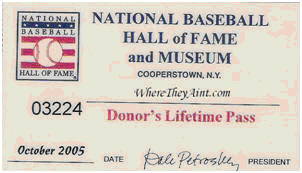
With over 35 years of combined experience, our reputation is well-known throughout the industry. In 2005, after donating a rare item from our personal collection, the National Baseball Hall of Fame honored us as Lifetime Members!


With our Investment guide, you will receive a monthly report and analysis breaking down the top 100 best and worst cards to invest. You will be able to see all the flows of the market place and be able to educate yourself on investing in the baseball card market.


For only $24.95, you have nothing to lose!!


Buy Today by clicking here for the Vintage Baseball Card Investment Guide PSA Mantle Ruth


With the largest inventory on the web, we are your first and last resort to find the cards and memorabilia you need!


We Hav'em Where They Aint!


What makes WhereTheyAint.com better than the competition?


GREAT SELECTION: Whether you are a serious, experience collector or a rookie to the hobby, whether you're looking for high-end stars or filling your set, we have what you need.


TOP NOTCH SERVICE: With over 35 years of combined industry experience, we are proud of our reputation. We've never had a complaint: in person, on any number of auction sites, anywhere. We respond promptly to all inquiries. And if we don't happen to have what you need, we'll find it!


ONLY THE BEST AUTHENTICATORS: At WhereTheyAint.com, we only use the very best and most respected authenticators. For cards, we mean PSA, SGC & Beckett grading services. And for your autograph collectors, you will find a nice selection of MLB, Steiner, & PSA/DNA authenticated pieces!


WE'LL GO THE EXTRA MILE: If we don't have what you are looking for, let us know. We'll do our very best to track it down. Our clients mean the world to us. And we will search the world for them!


CONSIGNMENTS: We Regularly Achieve too dollar for our clients. Contact us to help sell your collection!


We look forward to helping you! Please see our website www.wheretheyaint.com or contact us at Sales@WhereTheyAint.com for more information.


Friday, September 11, 2009

High Grade PSA Cards at Auction from WhereTheyAint.com!!!


High Grade PSA Cards at Auction from WhereTheyAint.com
Closing Sunday, September 20!

WhereTheyAint.com is proud to offer some of the biggest and best sports cards in the hobby! Currently on eBay are the following superb PSA graded baseball cards all starting at an initial bid of $.01:


1) 1940 Play Ball “Shoeless” Joe Jackson PSA 7


2) 1915 Cracker Jack John McGraw PSA 8


3) 1968 Topps Mickey Mantle PSA 9


4) 1949 Bowman Roy Campenella PSA 8 Rookie


5) 1954 Topps Tommy LaSorda PSA 8 Rookie


6) 1950 Bowman Ted Williams PSA 8


7) 1909 T206 Cy Young PSA 6


8) 1961 Topps Roberto Clemente PSA 9


9) 1954 Bowman Don Larsen PSA 8.5 Rookie


10) 1951 Bowman Carl Erskine PSA 8 Rookie


With the largest inventory on the web, we are your first and last resort to find the cards and memorabilia you need!


We Hav'em Where They Aint!


What makes WhereTheyAint.com better than the competition?

GREAT SELECTION: Whether you are a serious, experience collector or a rookie to the hobby, whether you're looking for high-end stars or filling your set, we have what you need.


TOP NOTCH SERVICE: With over 35 years of combined industry experience, we are proud of our reputation. We've never had a complaint: in person, on any number of auction sites, anywhere. We respond promptly to all inquiries. And if we don't happen to have what you need, we'll find it!


ONLY THE BEST AUTHENTICATORS: At WhereTheyAint.com, we only use the very best and most respected authenticators. For cards, we mean PSA, SGC & Beckett grading services. And for your autograph collectors, you will find a nice selection of MLB, Steiner, & PSA/DNA authenticated pieces!


WE'LL GO THE EXTRA MILE: If we don't have what you are looking for, let us know. We'll do our very best to track it down. Our clients mean the world to us. And we will search the world for them!

CONSIGNMENTS: We Regularly Achieve too dollar for our clients.

Contact us to help sell your collection!


We look forward to helping you! Please see our website www.wheretheyaint.com or contact us at Sales@WhereTheyAint.com for more information.

Thursday, May 28, 2009

Great Investments in Vintage Baseball Cards


As originally published at http://www.tcbusinessnews.com

Jeff Mugerian had a decision to make. Should he sink $5,000 into a mutual fund or put his money where his heart is: Baseball cards?

Mugerian, a local Traverse City business owner, took a hard look at the nearly perfect 1934 Goudey baseball card of Hall of Fame pitcher Dizzy Dean. It was graded 8 by a professional grading service on a scale of 1 to 10, with 10 being gem mint.“I know there aren’t many of these cards in this condition, especially of players like Dizzy Dean,” said Mugerian. “I have bought, sold and traded baseball cards for years, so I know more about these values than I do about mutual funds.”

So Mugerian made the purchase and put the card away as an investment.Good move?Traverse City broker Larry Avery, who works for Edward Jones, thinks so.“Over time, a diversified portfolio will outperform the portfolio overweighed in one area,” he said. “The most successful mutual fund companies have the best global research. In other words, they do their homework on the companies they invest in. Knowing the market for baseball cards or other memorabilia isn’t any different. Whether it is a stock, a bond or a mutual fund, a quality investment is just that.”

The key is doing your homework, just as you would in any other investment, according to a man who makes his living buying and selling sports memorabilia.“I think investing in old sports memorabilia has its place in a portfolio,” said Traverse City’s Chris Porter, who works for Mastro Auctions, Inc. near Chicago. “But it’s not as simple as just putting down your money. You have to invest some energy and time into what you’re doing.”

The 42-year-old Porter got his accounting degree from Michigan State, worked in that business for 10 years, then decided to get out and pursue his hobby as a business. He moved to Traverse City with Superior Sportscards, then worked for Leland’s out of New York and now Mastro’s the last three years, all while remaining in Traverse City with his family.“My job is to acquire cards and memorabilia for our Mastro auctions,” he said. “So I see a lot of great items and big money change hands.“For those people thinking about investing in baseball cards, the one thing I absolutely believe in is the use of grading services,” he said. “Don’t buy an ungraded card for investment purposes. I think a high-grade card, especially of stars from the Depression Era, are a great investment right now. They are underpriced.”

He is referring to cards like Mugerian purchased from the 1930s, a Goudey gum card. During the 1930s and ’40s, other companies like Diamond Star, Play Ball and DeLongs produced cards. Before that, tobacco cards were produced at the turn of the century and into the 1920s. Bowman baseball began producing cards in 1948 and then Topps, which still produces cards today, began production in 1952 and knocked Bowman out of business after 1955.“There are still people alive who collected cards in the 1930s and ’40s,” said Porter.

“To them, the players from that era were tough, good guys – not the spoiled brats they read about today. There are still collections of those cards out there.”Porter’s job is to uncover them and bring them to the open market.“Baseball cards can go through price fluctuations like anything else,” he said. “Some values will hit a plateau, go flat, then spike up again. But star cards that have high professional grades have never had an extended period of loss of value.”Mugerian likes the idea of investing in quality baseball cards and sports memorabilia.“I think investing in anything that is in demand, vintage and in great condition is a wise idea,” he said.

“With the stock market, it’s always possible in this economy that your money will erode or disappear. With sports memorabilia, there are fewer collectors in a bad economy, but the collectors will never simply vanish and you will always still be physically holding your investments in hand.”Mugerian believes his return on investment is well worth the risk.“Not only do I see high-end stuff hold its value, but the rate of return can be astronomical,” he said.

“I remember sitting in a hotel ballroom in New York City during a Leland’s auction. A particular baseball was up for sale and the auction house was estimating a $5,000 to $10,000 price. What Leland’s didn’t know was that two heavy hitters were planning on owning this baseball, including actor Charlie Sheen. After many minutes of spirited bidding, the ball sold for $105,000. With quality vintage items, the sky can be the limit.”But Mugerian, who started collecting cards in 1975, echoes Porter’s assessment that people who do their homework have the best shot at making money with their baseball card investments.

“That’s not to say that someone who doesn’t follow the hobby can’t make a buck,” he said. “But when you are enjoying what you are learning about, I think you are more astute. The key is to educate yourself.”

1939 Play Ball Cards


As originally published on sportscollectorsdaily.com


They look a little crude today. Black and white photos. Dated fonts on the back and some printing errors. 70 years after they first hit the market, though, the 1939 Play Ball set has stood the test of time.


In fact, the 161-card set was a bit revolutionary. While photos of some earlier issues were often dark, grainy or distorted, the Play Ball cards kids pulled out of gum packs were pretty clear. Advances in photography following the Depression had changed the landscape.


Magazines like LIFE brought world events home through those modern images. Americans, no matter where they lived, were seeing things in a much clearer light. Baseball was celebrating its centennial year in 1939 and Gum, Inc., based in Philadelphia took the bull by the horns to become the only card manufacturer in '39. Goudey Gum had basically disappeared by then, and was four years removed from any large scale offering it had made.


Play Ball cards were also unique in that baseball cards had not only grown up, but grown in size at 2 1/2" x 3 1/8". It allowed for extensive write-ups on the back--even the use of the players' full names. Kids may have learned for the first time that their favorite player was "Joseph Paul DiMaggio Jr." and Ted Williams was "Theodore Samuel Williams". We can only surmise the number of playground bets that were won and lost.


There may have been some confusion, too, for the aggressive youngsters who tried to collect a complete set. At the bottom of each card's back was an advertisement that stated there were 250 cards in the set. By the time Gum Inc. had finished production, there were only 161 subjects. 162 cards had been numbered but #126 was never issued. There were two series issued and the high numbers are decidedly harder to come by. #1-115 are usually $20 and under in mid-to-high grade. Commons from #116-152 are twice that and more.


The key cards in the set include the Williams rookie card (#92), which commonly sells for $2,000 and up in higher grade, and DiMaggio (#26), just coming into his own as a Yankee. Expect to pay $1,000 or more for a high quality DiMaggio, many times that for a graded NM or Mint copy. Both are high on collectors' want lists. There are also a number of Hall of Famers including Leo Durocher, Bill Dickey, Lefty Gomez, Charlie Gehringer, Mel Ott, Hank Greenberg and the Waner brothers. Another popular card is the 'rookie' card of catcher Moe Berg. A journeyman player, Berg gained fame for his work as a spy for the United States leading up to World War II. Berg's card can run over $100, despite his profound lack of Hall of Fame credentials as a player.


There are variations throughout the set, including a number of first series cards which have the player's name in all capital letters or upper and lower case, which many consider to be more scarce.


A complete set of 1939 Play Ball cards will cost anywhere from $4,000 to $10,000 in mid to high grade. Completely graded sets will run higher, while lower grade sets can be had for less.Play Ball would last just three years. An extensive set of modern and retired players was issued in 1940, followed by a color set in 1941 that included only 72 cards. War was approaching and paper conservation meant few cards of any kind were produced until the late 1940s.

History Behind the Holy Grail of Baseball Cards


As previously published on honus-wagner.org


The Honus Wagner T206 is considered by collectors to be the "Holy Grail" or "Mona Lisa" of all baseball cards. There are only 50 to 60 believed to be in existence and the card has broken a number of records including:- First baseball card to be professional graded by the PSA (Professional Sports Authenticator). The card shown on the left is marked #00000001- First baseball card to sell for over $1 million- Highest priced baseball card available, currently valued at $2.8 millionHere is a history as to how the Honus Wagner T206 PSA 8 came to be worth so much money.


T206 Wagner PSA 8 Price History:


1930: $50
1985: $25,000
1987: $110,000
1991: $451,000
1995: $500,000
1996: $641,500
2000: $1,265,000
Feb 2007: $2.35 Mil
Sept 2007: $2.80 Mil


1930s:


In the 1930s, according to baseball card catalogues, the Honus Wagner T206 cards were listed at a value of $50. Other T206 cards were valued at 35 cents making the Wagners a premium. Nobody, however, could have predicted that the card would come to be worth millions over 70 years later.


Alan Ray and Bill Mastro:


The Honus Wagner T206 made its first appearance in the modern world of sports card collecting in 1985 when Alan Ray, a small time card collector, went to see Bob Sevchuk who owned a New York based sports memorabilia store where Ray was a regular customer.Ray was hoping to sell his Honus Wagner T206 for $25,000 to Sevchuk. Bill Mastro, another sports memorabilia store owner and future founder of Mastro Auctions, caught wind of the card's availability and expressed an interest in buying it. He drove to Sevchuk's store and agreed to buy the card from Ray but only if he threw in the other 50 to 75 T206's that Ray had brought along as well. Ray made the deal, later saying "I had a money situation. I had to sell the card"The origins of the card still remain a mystery and have never been disclosed. Ray has only said in 2001 that he received the card from a relative, whose name he did not divulge.


Jim Copeland:


In 1987, Mastro contacted Jim Copeland, a sporting goods chain owner in California, and sold him the card for $110,000, realizing a $85,000 profit in under two years. "I called from the airport in California," Mastro says, "and ordered a Mercedes Benz."The sale sparked a renewed interest in baseball card collecting and created an incentive for people to find and sell their cards from the T206 series.


Wayne Gretzky and Bruce McNall:


In 1991, Copeland decided that he wanted to sell his collection of 873 pieces in a single sale. He contacted Mastro to help him sell the card. Mastro contacted Sotheby's, one of the most well known auction house in the world, to arrange the sale. Over 800 collectors showed up and the Honus Wagner T206 was expected to go for $114,000 according to pre-auction estimates.Within minutes of opening the card soared past $228,000, double the original pre-auction estimate. There were three bidders for the card: Mike Gidwitz, Mark Friedland, and an unknown phone bidder. Gidwitz dropped out when the price hit $300,000. Friedland pursued and found that with each successive price increase he made, the anonymous phone bidder would further raise $5,000 or $10,000. Friedland finally called it off when the price hit $410,000. Sotheby's took at 10% buyer's premium on the value of the card so the final sales price was $451,000.


It was later discovered that the anonymous phone bidder was none other than NHL hockey great Wayne Gretzky who bid on the card with the financial support of Los Angeles Kings owner Bruce McNall. Mastro continued to work for Sotheby's for the next 5 years to facilitate the sale of expensive sports memorabilia and thereby establishing himself as the expert in the industry.Gretzky, not known at the time for being a card collector, thought it would make a good investment and that "the market would remain strong. Still, my dad told me I was an idiot for paying $450,000 for a baseball card."


According to his co-owner McNall, "If you buy something that is absolutely the best in the world, you'd be okay because there is always another buyer for something at the top end."The record-setting purchase made headlines and the card quickly became known as the "Gretzky T206 Wagner." To validate its authenticity, the Professional Sports Authenticators (PSA) chose the card to be the first that it would grade. The card received a PSA 8 - NM-MT (near mind to mint), the highest grade so far awarded to a Honus Wagner T206 baseball card. PSA President David Hall called it "superb" and a "fantastic card in every way."


Wal-Mart and Patricia Gibbs:


Shortly after the PSA graded the Honus Wagner T206, Bruce McNall became the subject of a federal investigation for fraud. He was later charged in 1994 for defrauding 6 banks of more than $236 million. With his partner off to a start a 70 month prison sentence, Gretzky decided to buy him out for his share and put the card back on the auction block.In 1995, the Honus Wagner T206 was sold to Wal-Mart and Treat Entertainment for $500,000. The companies wanted to use the card as the top prize in a promotional campaign to raise awareness about the baseball card products that Wal-Mart was selling. As part of the contest, the card traveled all across the United States and on February 24th, 1996, the 122nd anniversary of Honus Wagner's birthday, the T206 prize winner was chosen in a random draw made by Brooks Robinson on an episode of CNN's Larry King Weekend. The winner was Patricia Gibbs, a postal worker from Florida.Gibbs could not afford the taxes on the Honus Wagner T206 so she put it up for auction with Christie's, another New York auction house. Wal-Mart benefited heavily from the exposure and sold more than 30 million packs of baseball cards in a matter of months.


Michael Gidwitz:


The Honus Wagner T206 went to auction in 1996 and the top bidder was a familiar name, Michael Gidwitz, one of the men who battled Wayne Gretzky for the card in 1991 and lost. Bill Mastro was also bidding for the card but lost out this time to Gidwitz. According to Mastro, "No one ever wants to separate themselves from the crown jewel of the hobby."Gidwitz, a Chicago based collector, had to pay a significant premium over the $451,000 1991 price tag. He ended up spending $641,500 to acquire the card in 1996.


Brian Seigel, Anonymous, Anonymous:


After owning the Honus Wagner T206 for four years, Gidwitz decided it was time to sell. Instead of approaching a brand name auction house, he used technology to his advantage and made a deal with the largest online auction company in the world: eBay.


Gidwitz partnered with Robert Edwards Auctions, a division of MastroNet, to create a 10 day auction for the card. Prospective bidders had to wire a $100,000 deposit to iEscrow.com to be pre-approved to enter the auction. According to Robert Lifson, director of Robert Edwards Auctions, "I was thinking how could I leverage the publicity value of this card. I thought it would be really something if I approached eBay with this idea."


On July 15th of 2000 the Honus Wagner T206 was sold on eBay to Brian Seigel, a California collector for a record $1,265,000. This was a the first time that a baseball card had sold for more than $1 million. At the time Seigel said "Some day I'll sell it. I guess when I get tired of it. But this was not a business move. I am a collector."


In February 2007, however, Seigel decided that it was indeed time to move on and the card was sold again, this time to an anonymous California buyer via SCP Auctions for $2,350,000. According to SCP President David Kohler, the new owner said "'Let's let the world know and have a news conference, but I don't want my name out there.' We have to respect that."


Finally, on September 6th, 2007 the Honus Wagner T206 it was sold most recently to another anonymous collector for a record $2,800,000. It is rumored that the card will be put on display at a number of upcoming conventions and events.Who the owner is and when the famed card will next go on sale is anyone's guess. Only time will tell how high the price Honus Wagner T206 can go.


October 2008 Update: It was recently revealed that the current owner of the famous Honus Wagner T206 is E.G. "Ken" Kendrick, managing general partner of the Arizona Diamondbacks baseball team. Kendrick is a veteran collector and is believed to be creating a sports museum at Chase Field where the card will be put on display.