Showing posts with label Ted Williams. Show all posts

Wednesday, March 16, 2011

1954 BOWMAN #66 TED WILLIAMS PSA 8 FOR SALE!!


Now available for sale is a terrific 1954 Bowman Ted Williams PSA 8!! This card has fantastic corners, color, and surface!!

One of the most famous cards you will ever see!!

To purchase this card or see some other great cards in our inventory, please contact us at Sales@WhereTheyAint.com

Tuesday, December 15, 2009

High Grade PSA Cards at Auction from WhereTheyAint.com


WhereTheyAint.com is proud to offer some of the biggest and best sports cards in the hobby! Currently on eBay are the following superb PSA graded baseball cards all starting at an initial bid of $.01:

1.1911 T205 Christy Mathewson PSA 6
2.1911 T205 Eddie Collins PSA 6
3.1912 Hassan Triple Folders Ty Cobb PSA 6
4.1935 Diamond Stars Hank Greenberg PSA 8
5.1935 Goudey Babe Ruth PSA 6
6.1957 Topps Ted Williams PSA 8
7.1957 Topps Yankees Team Card PSA 9
8.1959 Fleer Ted Williams/Babe Ruth/Eddie Collins PSA 9
9.1963 Bazooka Babe Ruth PSA 8
10.1973 Topps Ernie Banks PSA 10


With the largest inventory on the web, we are your first and last resort to find the cards and memorabilia you need!

We Hav'em Where They Aint!

What makes WhereTheyAint.com better than the competition?

GREAT SELECTION: Whether you are a serious, experience collector or a rookie to the hobby, whether you're looking for high-end stars or filling your set, we have what you need.

TOP NOTCH SERVICE: With over 35 years of combined industry experience, we are proud of our reputation. We've never had a complaint: in person, on any number of auction sites, anywhere. We respond promptly to all inquiries. And if we don't happen to have what you need, we'll find it!

ONLY THE BEST AUTHENTICATORS: At WhereTheyAint.com, we only use the very best and most respected authenticators. For cards, we mean PSA, SGC & Beckett grading services. And for your autograph collectors, you will find a nice selection of MLB, Steiner, & PSA/DNA authenticated pieces!

WE'LL GO THE EXTRA MILE: If we don't have what you are looking for, let us know. We'll do our very best to track it down. Our clients mean the world to us. And we will search the world for them!

CONSIGNMENTS: We Regularly Achieve too dollar for our clients. Contact us to help sell your collection!

We look forward to helping you! Please see our website www.wheretheyaint.com or contact us at Sales@WhereTheyAint.com for more information.

Wednesday, October 21, 2009

VINTAGE BASEBALL CARD INVESTMENT GUIDE!!!


If only your mother didn't throw out your baseball cards, you would be rich


Well, now you can be!!


With our Baseball Card Investment Guide, you can learn which baseball cards to invest in to achieve the most profit!!!


Investing in today's world is very difficult. All the "Experts" on wall street could not predict the great recession we are in. Americans have lost millions in the stock market just over the past year.


Meanwhile, the market for collectibles, especially baseball cards, has remained steady. Every day, sales for baseball cards are breaking records!! This is your opportunity to learn the secrets to amassing a great fortune investing in baseball cards.


Do you realize that if could have purchased a 1909 T-206 Honus Wagner PSA 8 card in 1985 for $25,000? In September 2007, that card sold for a record $2.8 million!!!


Don't miss out on the next great investment!!


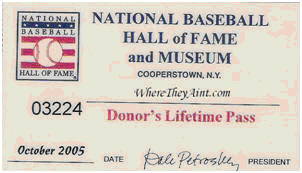
With over 35 years of combined experience, our reputation is well-known throughout the industry. In 2005, after donating a rare item from our personal collection, the National Baseball Hall of Fame honored us as Lifetime Members!


With our Investment guide, you will receive a monthly report and analysis breaking down the top 100 best and worst cards to invest. You will be able to see all the flows of the market place and be able to educate yourself on investing in the baseball card market.


For only $24.95, you have nothing to lose!!


Buy Today by clicking here for the Vintage Baseball Card Investment Guide PSA Mantle Ruth


With the largest inventory on the web, we are your first and last resort to find the cards and memorabilia you need!


We Hav'em Where They Aint!


What makes WhereTheyAint.com better than the competition?


GREAT SELECTION: Whether you are a serious, experience collector or a rookie to the hobby, whether you're looking for high-end stars or filling your set, we have what you need.


TOP NOTCH SERVICE: With over 35 years of combined industry experience, we are proud of our reputation. We've never had a complaint: in person, on any number of auction sites, anywhere. We respond promptly to all inquiries. And if we don't happen to have what you need, we'll find it!


ONLY THE BEST AUTHENTICATORS: At WhereTheyAint.com, we only use the very best and most respected authenticators. For cards, we mean PSA, SGC & Beckett grading services. And for your autograph collectors, you will find a nice selection of MLB, Steiner, & PSA/DNA authenticated pieces!


WE'LL GO THE EXTRA MILE: If we don't have what you are looking for, let us know. We'll do our very best to track it down. Our clients mean the world to us. And we will search the world for them!


CONSIGNMENTS: We Regularly Achieve too dollar for our clients. Contact us to help sell your collection!


We look forward to helping you! Please see our website www.wheretheyaint.com or contact us at Sales@WhereTheyAint.com for more information.


Tuesday, November 18, 2008

The New Hall of Fame Classic


With the annual Hall of Fame Game now just a memory, the National Baseball Hall of Fame and Museum will inaugurate a new tradition next year: the Hall of Fame Classic Weekend to coincide with Father's Day and the beginning of summer.


The Hall of Fame has teamed up with the Major League Baseball Players Alumni Association to create the Hall of Fame Classic, which will make its debut the Father's Day weekend of June 20-21 with an assortment of interactive activities at both the Museum and historic Doubleday Field in Cooperstown, N.Y.


The Classic -- to be held Sunday, June 21 -- is an exhibition game featuring four Hall of Famers and more than 20 other retired Major League players. In addition, there will be a hitting contest and autograph sessions throughout the day with no extra cost for Hall of Fame Classic ticket holders.


"We are extremely excited to start a new Cooperstown tradition for multi-generational families everywhere," Hall of Fame President Jeff Idelson said. "In tandem with the MLBPAA, we are thrilled to bring a marquee event to Doubleday Field, which promises to be a lot of fun and incredibly interactive. We know how much our visitors appreciate the human connectivity our events encompass."


Doubleday Field, the site of the defunct annual Hall of Fame Game, has been made famous by scores of Major League stars and future Hall of Famers who played exhibition games there, the filming of scenes from A League Of Their Own in 1992 and recently as a concert venue for Bob Dylan, Willie Nelson, Paul Simon, The Beach Boys and others.


Other events being planned are a game of catch at Doubleday Field for fathers and their children or grandfathers and their grandchildren, as well as a skills clinic for children, featuring former Major League players, and a number of events in the Museum in a salute to fathers. Ticket information and a complete schedule of events are forthcoming.


"We're honored to be a part of this," said Hall of Famer Brooks Robinson, who is also the president of the Alumni Association. "There's a lot we can do to promote the game of baseball. This will be a great success and hit here in Cooperstown. It will be a lot of fun, autographs, family entertainment. That's what it's all about."


"I think it's fantastic for the Museum and the Hall of Fame," Hall of Fame Chairman of the Board Jane Forbes Clark said. "It's really terrific for the community. This allows us to fill that gap with programming. I'm thrilled."


"We will couple The Classic with a number of other exciting family activities and programs throughout Classic Weekend, assuring that Cooperstown is the definitive Father's Day Weekend destination," Idelson added. "Classic Weekend will be engaging, educational and tremendous fun for community members, as well as baseball-loving families across the country. Given that Cooperstown is steeped in nostalgia, a legends-style baseball game is a natural fit."


The cancellation of the 2008 Hall of Fame Game ended a tradition dating to 1940, when the Chicago Cubs beat the Boston Red Sox, 10-9, despite two home runs by Ted Williams. Scheduling problems in recent years resulted in the end of the series that was an annual pairing of Major League clubs in the traditional birthplace of the sport.


When the Hall of Fame Museum officially opened June 12, 1939 -- an open date on the big league schedule -- an All-Star Game was played featuring two players from each big league club and managed by Hall inductees Honus Wagner and Eddie Collins. There were also exhibition games later that summer between the New York Yankees and the Triple-A Newark Bears, and between the Philadelphia Athletics and the Penn Athletic Club.


At that year's Winter Meetings, the clubs agreed to arrange for teams to participate annually in an exhibition game in Cooperstown, starting in 1940. Through 1978, the game was scheduled the same Sunday as the Induction Ceremony. From 1979 through 2002, games were scheduled the Monday after the induction.


This was the sixth consecutive season that the Hall of Fame Game was to be held on a separate weekend from the induction. What was supposed to be the last Hall of Fame Game in June, between the Cubs and San Diego Padres, was rained out. The last completed game was in 2007, when the Baltimore Orioles beat the Toronto Blue Jays, 13-7.

Friday, October 31, 2008

An Interview with Sy Berger, legendary founder of Topps Baseball Cards

As originally published on http://www.sabr.org/sabr.cfm?a=cms,c,806,34,0

Any way you slice it, Sy Berger is a legend. By most accounts, in 1951 the Bowman Company dominated the baseball card market. But in 1952, Topps took the industry by storm with a redesigned card that would literally change the face of popular culture for decades to come. Berger, with help from Woody Gelman, designed the 1952 Topps series which is considered by experts as the prototype of the modern day baseball card. But that’s only half the story. In order to produce the now classic cards that featured such greats as Mickey Mantle, Topps had to get signed contracts from every player whose card they produced. For decades, the man at Topps responsible for securing those contracts was also Berger. Through the golden age of baseball, he was a fixture in the New York clubhouses racing against the competition for exclusive contracts and making some lasting friendships along the way. At 81, Berger shows no sign of slowing down. Between dividing his time as an advisor to Topps, representing Willie Mays, playing with his grandchildren and an occasional round of golf among many other activities, Berger is as active as any 30 year-old. A member of SABR since 1978, we are delighted to provide a brief glimpse into the unique life of Sy Berger in this edition of the SABR Nine.

1. What do you think made your card design more appealing than Bowman?

Well, if you go back to the Bowman cards of 1948 and they were black and white…they were small...the pictures did not have any names on the front…they weren’t designed.
They did not put in a large card until we started to because they had it [the card market] to themselves, and what the heck, they didn’t have to do anything fancy. We came out in 1952 with a card in color, beautiful color…and a card that was large. Our first cards were 2 5/8 by 3 3/4…much larger [than Bowman’s]…and for the first time we had a team logo. Also, we had the 1951 line statistics and their lifetime statistics. I mean, no one else did it. Ours was the card of the fan…we stormed on them, we knocked them out of the box. And you can even see, if you really look carefully, the considered rookie card of Mickey Mantle is our 1952 card. Bowman had a card of Mantle in 1951. The first Bowman card was card number 253. It’s a valuable card, but you speak to people, "What’s Mantle’s rookie card?" And of course you know the answer. You’ve got to understand, we were neophytes in this, in putting out cards, especially seasonal cards like sports cards. Which I want you to know, I wrote very single one of those 1952 cards. I wrote them and I recalculated the statistics because everything in one book says a guy’s 6 foot 2, in the next book it says he’s 5 foot 11. One says he weighs 300lbs, the other says 200lbs. You know, information wasn’t that ready in those days and I worked and I did everything...the whole series at home. Three hundred and seven cards.

2. Who was the most instrumental player in helping Topps get started in the baseball trading card business?

As far as the players go, I went in to the clubhouses for the very first time in 1951…none of them knew who I was…I was just a young fella and had a good smile and they say it was my charm. Willie Mays, of course had a great impact. I am still his oldest and best friend and I handle most of his business affairs now. Of course, he became a star by ’54 when he came out of the Army and was MVP. And I was always in the clubhouse…this is New York. So, I was known as "Willie’s friend." [They would say] "Well, you know, if it’s good enough for Willie, it’s good enough for me."

Jerry Coleman, who was a player representative for the Yankees, [and I] worked out a contract in which we finally had to bow a little to things. Those concessions we made to him ended up in the contracts other players were signing. So that had an impact. If you look around there’s Ted Kluszewski, he was with Cincinnati. He was my man. And Gil Hodges. And Eddie Yost, who as a player representative, with the Washington Senators [was] also one of the guys I befriended.

3. Was your strategy at first trying to get as many players as you could or to get key players and
hope that others would join in?

My hope in those days was to go into a clubhouse and sign every guy in the clubhouse. I wanted to sign everybody. And, of course, there was opposition. Some guy would say, "Oh, no" because Bowman had gotten their rights. But I started signing players and the other people sort of moved away. Every time a team came to New York or Brooklyn I was there. I brought bubble gum into the clubhouses, and for the first time the guys were chewing bubble gum instead of tobacco. And I brought in picture cards [for the players]. You know Bowman never even gave the guys their picture cards! I brought in packages, a hundred of each guy’s card and gave it to them. Then I brought in the cards and put them around on the chairs and the tables. It was Topps. We had a presence. I was there, and Topps was there, we always brought our product into the clubhouse including Bazooka. And so as a result, I became very friendly with all of the players. I was always around.

4. Who are some of the notable sportswriters that worked with you and Topps over the years to produce and promote baseball cards?

In New York – Dick Young. He never failed to mention in his Friday notes column Topps or Sy Berger. Then Jack Lang. Dick Young was Daily News, Jack Lang was with the Newhouse papers. Norman Miller did the backs of a number of our sports cards after the initial year. And, oh yes, Arthur and Milt Richman. They supported me. I became part of the team. I was not a stranger. And as we go across the country, Jerry Holtzman. Very close. And also radio broadcasters…I knew everybody…fellows like the public relations director at the time for the Cincinnati Reds, Dave Grote who became the PR director of the National League and Warren Giles who became league president. And out on the coast, Mel Durslag, he was in Los Angeles and San Francisco. Harry Jupiter graduated from the same high school in New York as I did. But I found him in San Francisco.

5. What was something about Topps baseball cards or a particular Topps series that very few people would know about?

Everybody wondered how all of a sudden we had gotten Ted Williams in our 1954 series. We were in a legal battle with Bowman back-and-forth, and Bowman thought they had an option to get his picture in 1954. At any rate, Ted Williams was the man. I wanted to get him, to sign him.
Fred Corcoran was Ted Williams’ agent, and I told him I had a program I wanted to talk to him about that included Ted. I spoke to him and told him how I would feature Ted and we would do Williams honor. And he got up and he says, "Kid, I like you. You got Teddy." And we made a five-year deal. It was exclusive…he could only be on Topps picture cards for the next five years….’54 through ’58. And it was only $400 a year. Don’t forget that then we paid for exclusive contracts. Bowman was paying $100, were paying $125 for exclusive, $75 for non-exclusive. And Williams was probably getting $100 from them. This is going back to the old days. Then in ’54 Bowman thought they had an option but they didn’t and they printed his card, but they could not include it. [Once Bowman printed the card], we threatened to sue them because we had a contract. Of course some of them got out, but they had to go and hand pick the cards out. We used Williams through ’58 but gave him up in ’59 because Fleer offered him $5,000 to do a series [of just Williams].

6. Do you think the game is the same as it was in the 1950’s?

I know records are made to be broken, but there are so many different conditions as the years go on. They [records] should be specified by decades. Ten-year, even five-year. The player today is a guy who’s got wealth, particularly the stars. Well , the players in the early days, through the ‘50’s and the ‘60’s and even into the ‘70’s, for crying out loud, they had to go get a job to feed their family during the off-season. And how many Babe Ruths [star players] did you have? The money was tough. And also, today’s player keeps himself in shape. He virtually has to keep himself in shape all year. Then you go look into even the way the mind works. Nobody was walking Babe Ruth with the bases loaded. And nobody was walking Willie Mays with the bases loaded. Barry Bonds is a great hitter, but there’s a Sosa, there’s a Griffey, there’s so many of these guys who can hit. [Today’s players] have better equipment. Everybody’s bat used to be the same…Ash. Now you’ve got harder wood, you’ve got a tighter ball and you’ve got pitchers with more deliveries. How can you compare one to the next?

7. As Willie Mays’ friend, how do you think his accomplishments stand against Barry Bonds?

I have a very good relationship with Barry Bonds. I was dear friends with his father who he loved dearly. And Barry is very close to Willie Mays. Willie Mays is truly his godfather – it’s no game. He thinks a lot about Willie and I’ve heard Willie talk to him, "You shouldn’t do this, you shouldn’t do that." And Willie is for him breaking the record. Willie wishes every time he gets up that Barry hits a home run. My personal feeling is that if Willie hadn’t played in Candlestick Park he would have hit 800 home runs. Willie from ’58 or ’59 on had to swing in that park in the way it was originally built. They tried to fix it up a little, maybe a little. The wind blew in from left field. Just blew in. And I tell you I sat in a box at 3rd base for the whole game and papers were flying into my face. And here Willie is supposed to hit home runs to left field? So he had to learn to hit the ball to center field and right field, which was maybe 30, 40 feet longer. Still had a wind pushing it. My feeling about baseball and what I’ve seen, I have never seen a player as good as Willie Mays.

8. What do you think changed the dynamic of the trading card industry from kid-focused to collector-focused?

Value appreciation. Mama used to give you a nickel and say, "Now don’t buy those stupid baseball cards." And now she’s saying, "And remember, don’t forget to buy the baseball cards so you can go to college!" Value appreciation. Now it’s strictly for collectors. And it’s too bad because our baseball cards, I felt, were an encyclopedia for a kid. With our sports cards, we tried our best and I think we accomplished making them as accurate as humanly possible. Give the kid as much information as possible...In fact, I used to say, "We made baseball cards. Today, we make works of art." What more can we do?

9. So what do you think is the future for baseball cards?

I think everything is cyclical. And the time is going to come when suddenly baseball cards will be the big thing with kids again. Look at how people dress. They change…then suddenly you see, "Hey, we did that ten years ago." When they run out of new ideas, they go back to the old.

Monday, October 27, 2008

1950 Bowman Baseball Cards


1950 Bowman is an interesting set to collect because this was the only year in which Bowman had a monopoly on the baseball card business. No other national issues were released that year; Leaf ceased production in 1949 and Topps would not issue its first set until 1951. This set contains many great Hall of Fame cards of players like Jackie Robinson, Ted Williams, Yogi Berra, Warren Spahn, Bob Feller, Phil Rizzuto, Duke Snider, and Pee Wee Reese.


The 1950 Bowman set contains 252 cards. Cards #1-72 are scarce and are very difficult to find. Like the 1949 Bowman set, the 1950 Bowman cards measured 2 1/16" by 2 1/2", quite a bit smaller than what is now considered the standard size for baseball cards. The photographs on the front of the cards are colorized black and white photographs, with some black outlining.


The 1950 Bowman set marks the first time that Bowman would use this technique. Bowman would continue to feature this card front until color photographs were issued in the 1953 Bowman Color set. Most of the portraits are vertical, but a few of them (notably Snider and Berra) are horizontal.


The 1950 Bowman set marks the first time that Bowman would use this technique. Bowman would continue to feature this card front until color photographs were issued in the 1953 Bowman Color set. Most of the portraits are vertical, but a few of them (notably Snider and Berra) are horizontal.


The 1950 Bowman set also included, for the first-time, cards of non-playing managers like Casey Stengel and Leo Durocher. This trend continues today. This set also included Ted Williams’ first Bowman card. Interestingly, Bowman used the same Williams picture for the 1951 Bowman set as they did for the 1950 Bowman set. The last card in the set is #252 DeMars, which is very difficult to find in great condition.

Tuesday, September 23, 2008

1956 Topps Baseball Cards


The 1956 Topps set is an exciting set to collect. Topps purchased rival Bowman after the 1955 season and brought all the Bowman-contracted players to Topps. Thus, the 1956 Topps set contains 340 cards and an incredible 34 Hall of Fame players! Although Stan Musial’s contract with Rawlings prevented his inclusion, many other notable Hall of Famers are included: Mickey Mantle, Hank Aaron, Jackie Robinson, Duke Snider, Roberto Clemente, Al Kaline, Ted Williams, and many more!


The 1956 Topps baseball card set features dual images in a horizontal format. Because Topps possessed only one part-time photographer on its payroll, the company used some of the same player portraits as in the 1955 Topps set. The cards measure 2-5/8” x 3-3/4” and have three-panel cartoons on the back portraying significant moments in the player’s career along with statistics below and biographical information above.


The 1956 Topps Baseball Card Set is the first to include team cards as part of the set and there are two unnumbered checklist cards. Six of the team cards (Cubs, Phillies, Indians, Braves, Reds, and Orioles) were issued with the team names plus dates, or with the team names to the left, with either white or gray backs, or with team names centered with both back colors. Duplicates of team cards were easy to part with via flipping or bike spoke noise enhancers; therefore, given the lesser quantities of each of the varieties, and the fact that the cards were not highly treasured, putting together high grade sets with all the team card variations is a significant challenge.


Both Yankees and Dodgers team cards are also highly valued, selling for several hundred dollars in top grades. A master set contains cards #1-180 either white or gray backed, two unnumbered checklists, 15 additional team varieties (including the white and gray cardboard versions), plus cards #181 to 320. Therefore, there are 537 cards, not counting the print-flawed varieties, that can be collected.


The most popular card in the set is #135 Mickey Mantle. This beautiful version of the Mick represents his Triple Crown MVP season, when he batted .353, slugged 52 homeruns, and drove in 130 RBI. Also, popular from this set are #240 Whitey Ford, the American League E.R.A. leader, #31 Hank Aaron, the National League Batting Champion, #332 Don Larsen, winner of the only Perfect Game in World Series history, and #30 Jackie Robinson, his last card (after the season, Robinson would be traded to the New York Giants. Rather than play for his rival team, Robinson decided to retire).


Other players of note who appeared on the first Topps cards in 1956 were Luis Aparicio, Rookie of the Year, Don Larsen, Don Newcombe, Herb Score, Elston Howard, Lew Burdette, and Frank Torre.


Purchase 1956 Topps Cards Here!

Tuesday, September 16, 2008

1954 Bowman Baseball Cards


At only 224 cards, 1954 Bowman is a unique set. Due to Bowman’s fierce competition with Topps, Bowman established exclusive contracts with Hall of Famers Mickey Mantle, Roy Campanella, Robin Roberts, and Pee Wee Reese. Hall of Famers Willie Mays, Whitey Ford, and Bob Feller are also found in the set, as well as the rookie card of Yankee favorite, Don Larsen.


However, the one that got away was Ted Williams. After returning from the Korean War, Williams signed an exclusive contract with Topps. As a result of this contract, Bowman was forced to pull card #66 of Williams from its set and replace it with a card of Jimmy Piersall (who was also featured on card #210). This short-printing of the Ted Williams card created one of the most sought-after cards of the hobby's modern era.


As with the 1953 set, 1954 Bowman cards measured 2-1/2 by 3-3/4 inches. The card fronts feature a color photo as in the 1953 sets, but they were accompanied by a small color box at the bottom corner which housed a facsimile autograph of the player. The only other element featured on the front of the card was a white border. On the back, Bowman added a trivia question across the bottom of each card, as had been done with the 1953 Topps set. The answer to the question ran just below the player’s statistics.


Interestingly, Bowman numbered all its 1954 cards based on the player’s team. A rotation was used where every sixteenth card in the set featured a player from the same team. For instance, the Yankees had card 1, 17, 33, 49, etc; the Red Sox were on cards 2, 18, 34, 50, etc. Each team set has fourteen cards.


Due to competition with Topps, the 1954 Bowman set was printed so fast that almost 20% of the cards issued had statistical errors. Bowman later corrected these errors. Thus, there are a large number of variations in the set. In addition to the Ted Williams card, there are several other variations worth noting as well:


  • Cards #33 Vic Raschi and #163 Dave Philley mention that the player was traded, while others do not. To add to the confusion, there is a third Philley card which mentions the trade and also credits him with having played more games the previous year (157 rather than 152).


  • After the 1953 season, the St. Louis Browns moved to Baltimore, and Bowman's artists had no idea what the Oriole uniforms would look like. So they simply made the uniforms up.


Purchase 1954 Bowman Cards Here!